Loaded & Bobtail Semi-Truck Racing
Loaded-Specific Ratios
Gearing built around traction and steady pulling power.
Bobtail-Specific Ratios
Taller gearing built to chase RPM and top-end speed.
Clutch Matched To Class
Engagement tuned for your weight and traction profile.
Shift-Point Planning
Points mapped to keep you in the power band from launch to finish.
Loaded Competition vs. Bobtail Competition
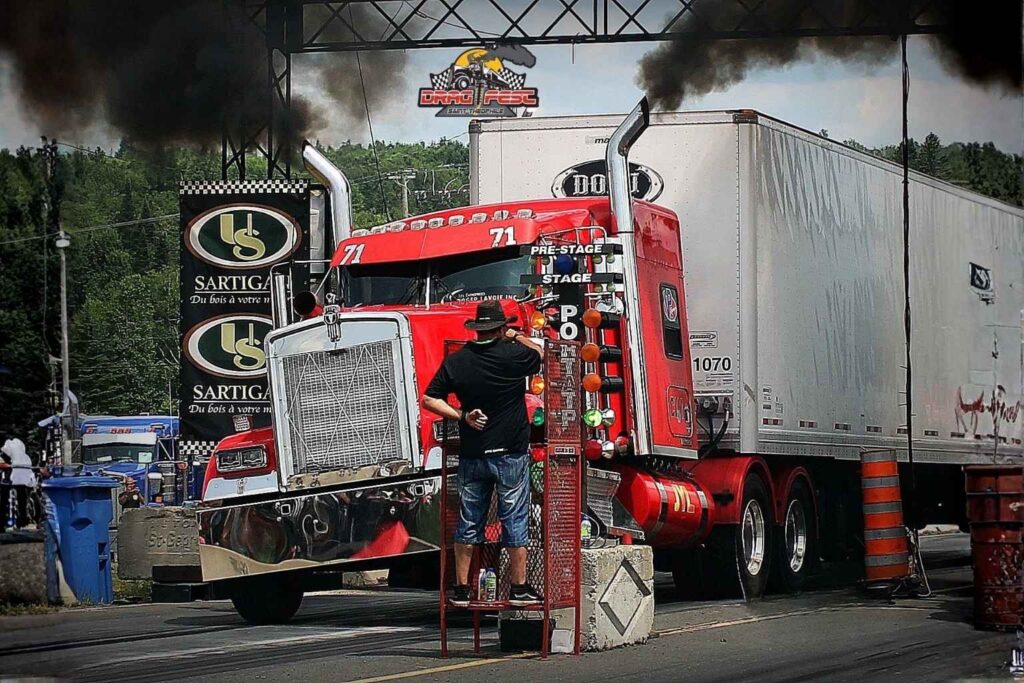
Loaded Competition
- Truck pulls a loaded trailer, adding weight and traction
- Lower gearing generally required to move the added mass
- Focus on steady, sustained pulling power over top speed
- Goal: maximize pulling force off the line and through the course
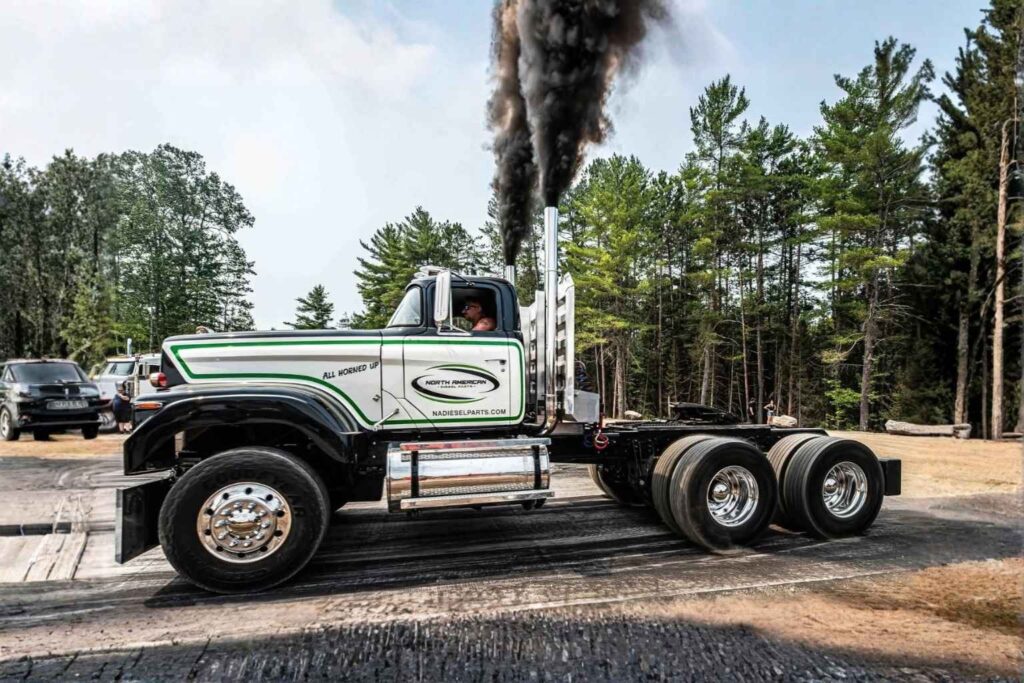
Bobtail Competition
- Truck runs without a trailer, reducing weight and traction
- Taller gearing generally used to reach higher RPM potential
- Focus on speed and RPM climb through the hill or course
- Goal: maximize top-end speed and RPM through the run
How Vehicle Weight Changes Gearing Requirements
Weight is the single biggest factor in how a race transmission should be geared. A loaded truck needs to move significant additional mass, which generally calls for lower, closer-spaced gearing to keep the engine working efficiently against that resistance.
A bobtail truck carries far less weight, which often opens the door to taller gearing aimed at reaching higher RPM and speed before the run is over. Getting this wrong in either direction can leave power on the table or bog the truck down off the line.
- Gear spacing considered relative to loaded vs. bobtail weight
- Engine power band matched to expected resistance
- Ratios built around your actual competition weight, not a guess
Matching Clutch Setup To Available Traction
Traction changes dramatically between loaded and bobtail runs. A loaded truck typically has more traction to work with, while a bobtail truck has far less weight over the drive wheels — which changes how the clutch needs to engage to put power down without breaking traction.
We look at your class, truck configuration, and track surface when discussing clutch engagement, so the setup is built with the goal of supporting consistent power delivery for your specific run.
Ratio Selection & Shift-Point Planning
Two more places where loaded and bobtail setups diverge — and two more places we tune specifically to your class.
Ratio-Selection Differences
Loaded setups generally favor closer, lower gear spacing to maintain pulling power. Bobtail setups often favor wider, taller spacing to build toward higher speed. Final ratio selection depends on your truck, class rules, and track.
Shift-Point Planning
Where you shift matters as much as what gear you're in. We help map shift points designed to keep the engine in its usable power band from launch through the finish, based on your typical run conditions.
Transmission & Clutch Packages
We build complete packages — transmission, rear section, and matched clutch — so the drivetrain works together as one system rather than a collection of parts.
Run Your Numbers Before You Build
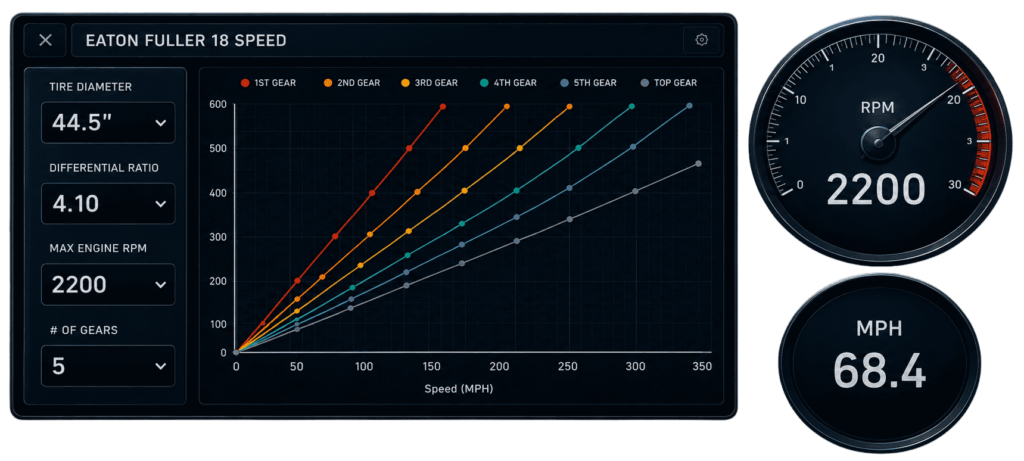
Use our Gear Analyzer to calculate tire size, differential ratio, shift points, and MPH by gear for both loaded and bobtail configurations — then compare setups side by side before you commit to a build.
How We Build Your Loaded Or Bobtail Package
01
Consultation
We learn your class, track, weight configuration, and racing goals.
02
Ratio Analysis
We use real data and the Gear Analyzer to dial in ratios for your weight class.