Loaded & Bobtail Semi-Truck Racing

Same finish line. Completely different drivetrain.
Loaded and bobtail competition ask opposite things from a transmission. We build gear ratios, clutch packages, and shift plans specific to your weight class — not a one-size-fits-all setup.

Loaded-Specific Ratios

Gearing built around traction and steady pulling power.

Bobtail-Specific Ratios

Taller gearing built to chase RPM and top-end speed.

Clutch Matched To Class

Engagement tuned for your weight and traction profile.

Shift-Point Planning

Points mapped to keep you in the power band from launch to finish.

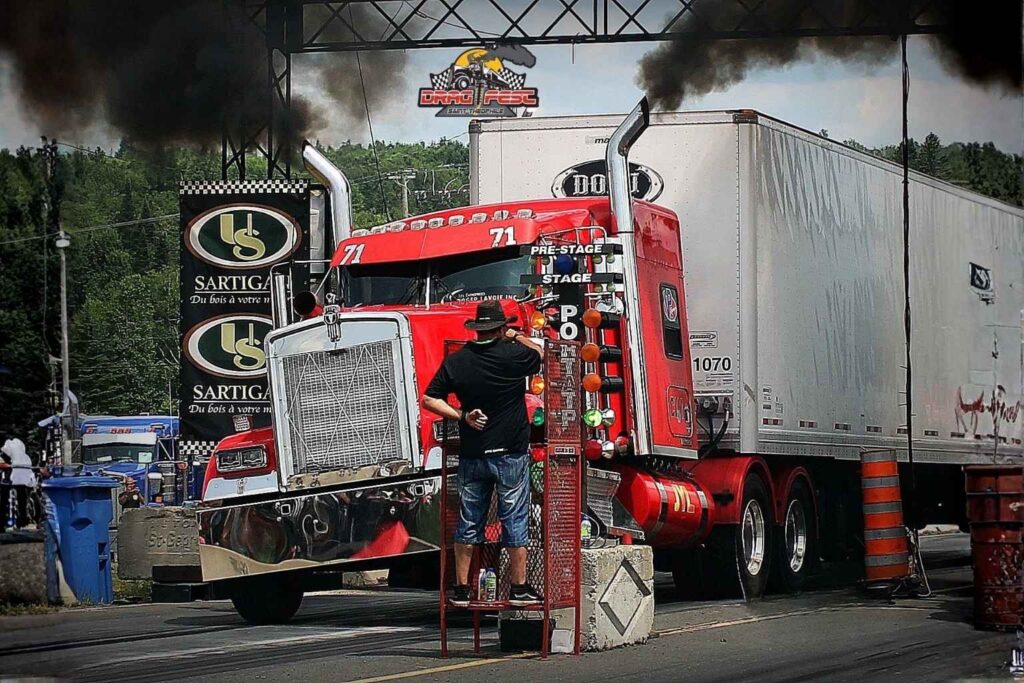
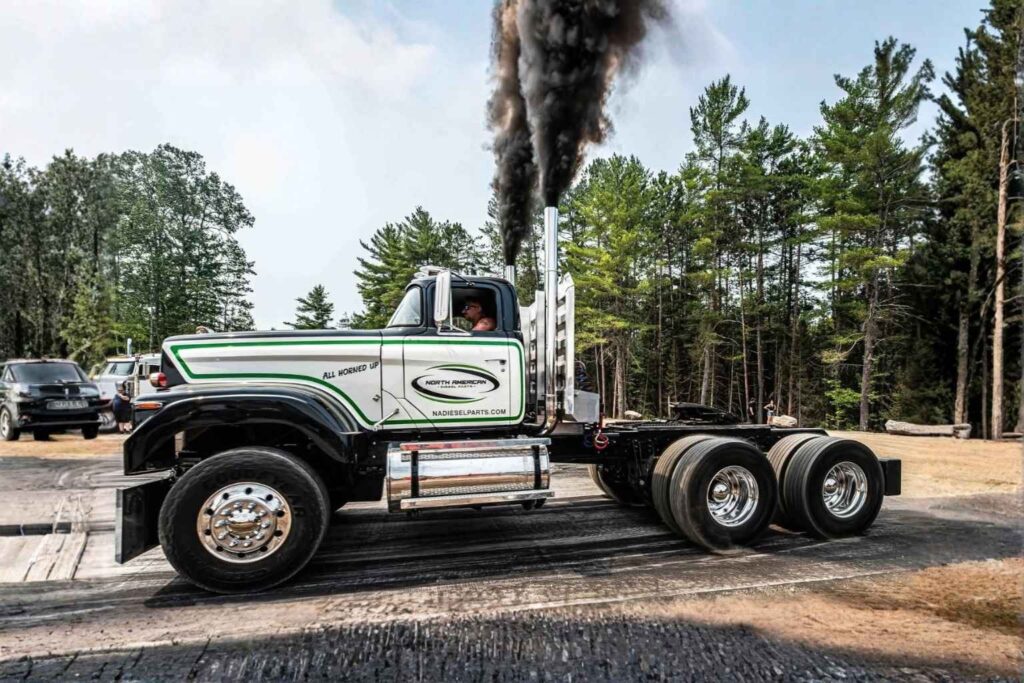
Loaded Competition vs. Bobtail Competition

Before we talk gear ratios, it helps to understand what separates the two classes — because the setup requirements aren’t just different, they’re often opposite.

Loaded Competition

MORE WEIGHT · MORE TRACTION

Bobtail Competition

LESS WEIGHT · HIGHER RPM
Setup requirements vary by track, class rules, and truck configuration. The above reflects general tendencies — your specific build should be discussed with us directly.

How Vehicle Weight Changes Gearing Requirements

Weight is the single biggest factor in how a race transmission should be geared. A loaded truck needs to move significant additional mass, which generally calls for lower, closer-spaced gearing to keep the engine working efficiently against that resistance.

A bobtail truck carries far less weight, which often opens the door to taller gearing aimed at reaching higher RPM and speed before the run is over. Getting this wrong in either direction can leave power on the table or bog the truck down off the line.

Over-the-Road Semi-Truck Transmissions

Matching Clutch Setup To Available Traction

Traction changes dramatically between loaded and bobtail runs. A loaded truck typically has more traction to work with, while a bobtail truck has far less weight over the drive wheels — which changes how the clutch needs to engage to put power down without breaking traction.

We look at your class, truck configuration, and track surface when discussing clutch engagement, so the setup is built with the goal of supporting consistent power delivery for your specific run.

Traction conditions vary by track surface, weather, and truck setup. Clutch recommendations are built around your typical conditions, not a guarantee of results on any given day.

Ratio Selection & Shift-Point Planning

Two more places where loaded and bobtail setups diverge — and two more places we tune specifically to your class.

Ratio-Selection Differences

Loaded setups generally favor closer, lower gear spacing to maintain pulling power. Bobtail setups often favor wider, taller spacing to build toward higher speed. Final ratio selection depends on your truck, class rules, and track.

Depends on class, track & setup

Shift-Point Planning

Where you shift matters as much as what gear you're in. We help map shift points designed to keep the engine in its usable power band from launch through the finish, based on your typical run conditions.

Results vary by driver & conditions

Transmission & Clutch Packages

We build complete packages — transmission, rear section, and matched clutch — so the drivetrain works together as one system rather than a collection of parts.

Built around your full setup

Run Your Numbers Before You Build

Use our Gear Analyzer to calculate tire size, differential ratio, shift points, and MPH by gear for both loaded and bobtail configurations — then compare setups side by side before you commit to a build.
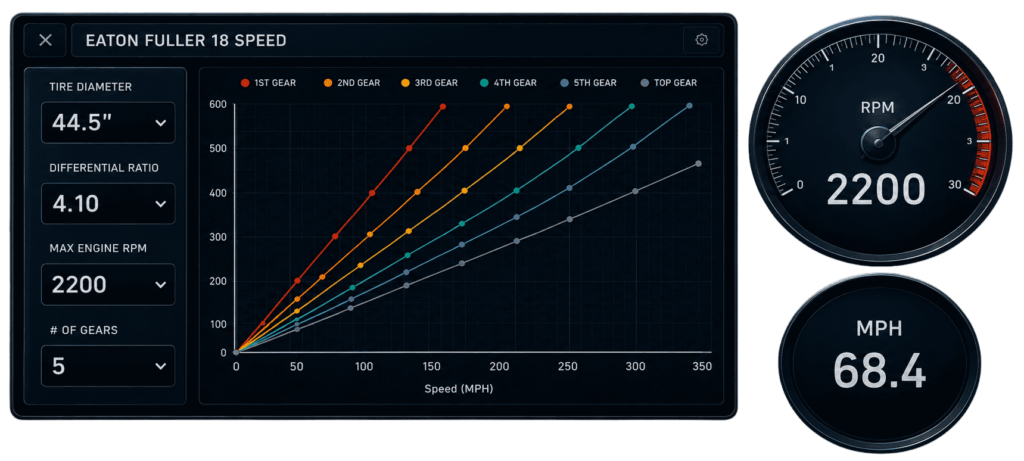
Eaton Fuller 18-Speed Gear Analyzer Showing RPM, MPH, and Gear Ratios

How We Build Your Loaded Or Bobtail Package

01

Consultation

We learn your class, track, weight configuration, and racing goals.

02

Ratio Analysis

We use real data and the Gear Analyzer to dial in ratios for your weight class.

03

Clutch Matching

Clutch engagement selected to suit your traction and power delivery needs.

04

Build

CNC-machined components, precision assembly, built as a complete package.

05

Test & Verify

Checked for correct engagement, strength, and accuracy before it leaves the shop.

06

Delivered Ready To Race

Shipped or picked up, track ready for your class.

THE RIGHT BUILD STARTS WITH DETAILS THE RIGHT

Every custom transmission begins with understanding your truck, racing application, and performance goals. Send us your current transmission, rear gear ratio, tire diameter, loaded or bobtail configuration, and the result you want to achieve. We’ll review your combination and contact you to discuss the right direction for your build.

Frequently Asked Questions

What’s the difference between loaded and bobtail racing?
Loaded racing places substantially more weight and resistance on the drivetrain, generally requiring lower, closer-spaced gearing and a clutch setup that can manage the additional load. Bobtail racing removes the trailer weight, giving the truck less traction but allowing it to accelerate faster and operate at higher RPM.
How do you determine the right gear ratio for my class?
We consider your competition weight, engine powerband, shift RPM, transmission model, differential ratio, tire diameter, track length, surface, and loaded or bobtail configuration. These details help us plan ratios that keep the engine working effectively from launch through the finish.
Do you help with shift-point planning?
Yes. We evaluate your engine’s usable RPM range and calculate the RPM drop between gears to help identify practical shift points. The goal is to keep the engine inside its strongest power range while avoiding unnecessary shifts during the run.
Can you help me choose between loaded and bobtail classes?
Yes. We can discuss your truck’s configuration, available power, traction, current drivetrain, racing experience, and performance goals. You should also review the rules for the events you plan to enter, as class requirements can vary between tracks and organizations.
Can I use the same transmission for both classes?
Possibly, but a transmission optimized for one class may be a compromise in the other. The large difference in competition weight and available traction can change the ideal starting ratio, gear spacing, shift points, and clutch engagement. We can evaluate whether one setup can serve both classes or whether a class-specific configuration would be more effective.
What clutch works best for bobtail racing?
There is no single clutch setup that works best for every bobtail truck. A properly calibrated multi-disc slipper clutch can help control engagement and reduce wheelspin, but its settings must match the truck’s horsepower, weight, tires, track surface, transmission ratios, and launch characteristics.
How long does a loaded or bobtail build take?
Build time depends on the transmission’s condition, required components, machining needs, and the shop’s current workload. After reviewing your application and transmission, we can provide a more accurate estimated schedule. Contact us for current lead times before shipping or delivering your unit.
Do you build custom rear sections for these classes?
Yes. We can configure custom rear sections for loaded and bobtail racing when the transmission platform and application support it. The final configuration is selected around your target ratios, engine powerband, differential ratio, tire diameter, competition weight, and intended class.

Your win starts here.

Let’s build a transmission that’s built for your track, your power, and your goals.
Scroll to Top